
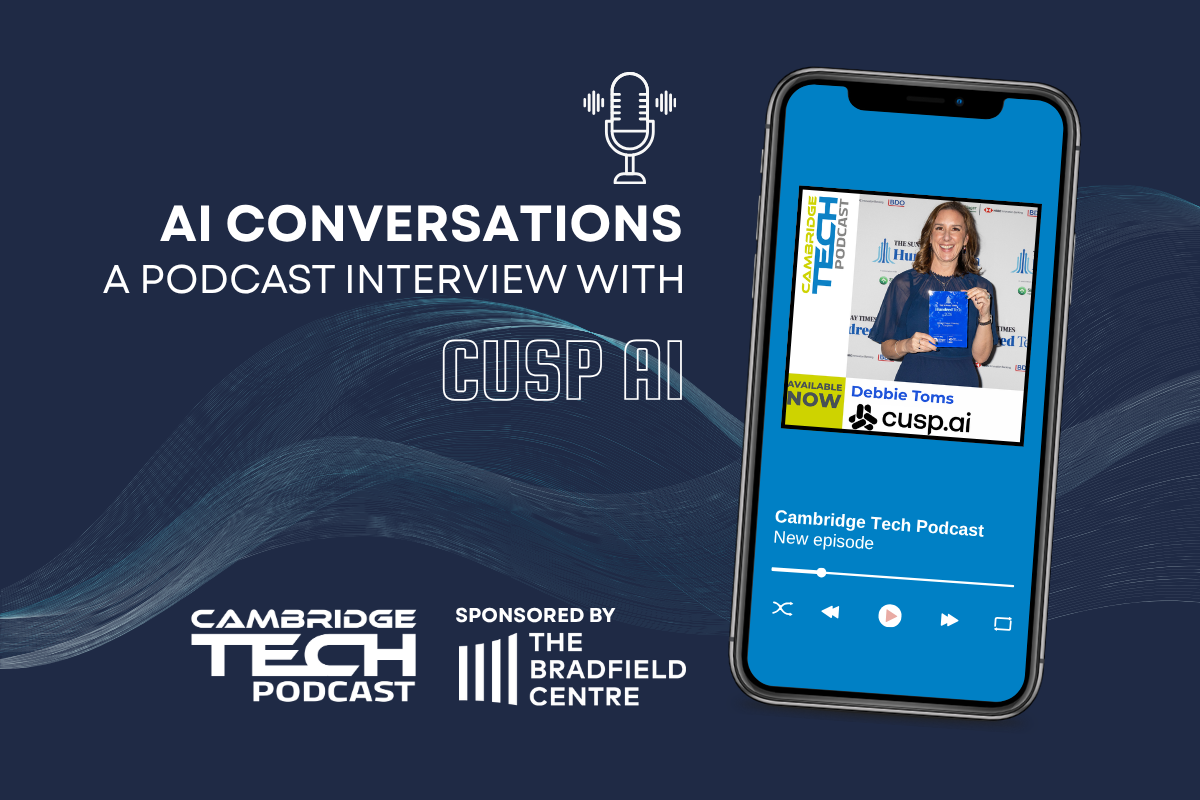
When Debs Toms met Chad Edwards at a casual barbecue in early 2024, neither of them could have predicted what would unfold. Two years on, CUSP AI has raised over $130 million, assembled a world-class team across Europe, and is tackling some of humanity's most pressing challenges through AI driven materials discovery. It's the kind of origin story that makes you question whether you've been to the right barbecues lately.
Why CUSP AI's Story Matters
What makes Debs' journey particularly compelling is her transition from structured corporate roles. Nine years at Deloitte, eight at Marshall Aerospace, to the controlled chaos of an early-stage deep tech startup. Her insight?
"You have to get very comfortable very quickly with just not knowing all the answers."
The company itself represents a genuine breakthrough. CUSP AI has built an agentic platform that models material properties with extraordinary speed. Where traditional materials discovery involves years of laboratory work with a mere 6% success rate, CUSP AI can deliver equivalent results in 45 minutes with a projected 90% success rate.
Key Milestones in Two Years
Company incorporated March 2024
Seed round closed June 2024
First platform version live January 2025
Series A raised over $100 million (preempted during a team retreat in Wales—yes, really)
Team grown to 55 employees with contracts signed for more across UK, Amsterdam, Berlin, and London
Real-World Impact That Matters
CUSP AI isn't building technology for technology's sake. Their partnerships focus on genuinely transformative applications:
Carbon capture through direct air capture (DAC) projects with Meta
Forever chemicals removal from water in partnership with Khmera, a NASDAQ-listed Finnish company
Next-generation batteries and semiconductors addressing real infrastructure challenges
As Debs notes, there's genuine purpose embedded in the work: "The loveliest thing about that project is our lead chemist working on that project was actually pregnant at the time and is really aware that this is something that is impacting human life."
What's Next?
CUSP AI is expanding aggressively into Asia-Pacific with a Singapore office and partnership already in motion. They're announcing new talent hires and partnership deals over the coming months, with an ambitious goal to deliver best-in-class materials by year-end.
For founders and investors, CUSP AI's story offers several lessons: the importance of mission-driven teams, the power of combining deep technical expertise (Max Welling's world-leading AI research) with commercial acumen (Chad Edwards' background), and the value of building based on what customers actually need.
Listen to the full episode to hear Debs discuss the mental health implications of AI tools, why Cambridge needs to do more for AI talent, and how she maintains culture whilst scaling at breakneck speed.