
What does it take for an established company to create the kind of breakthrough that changes its market?
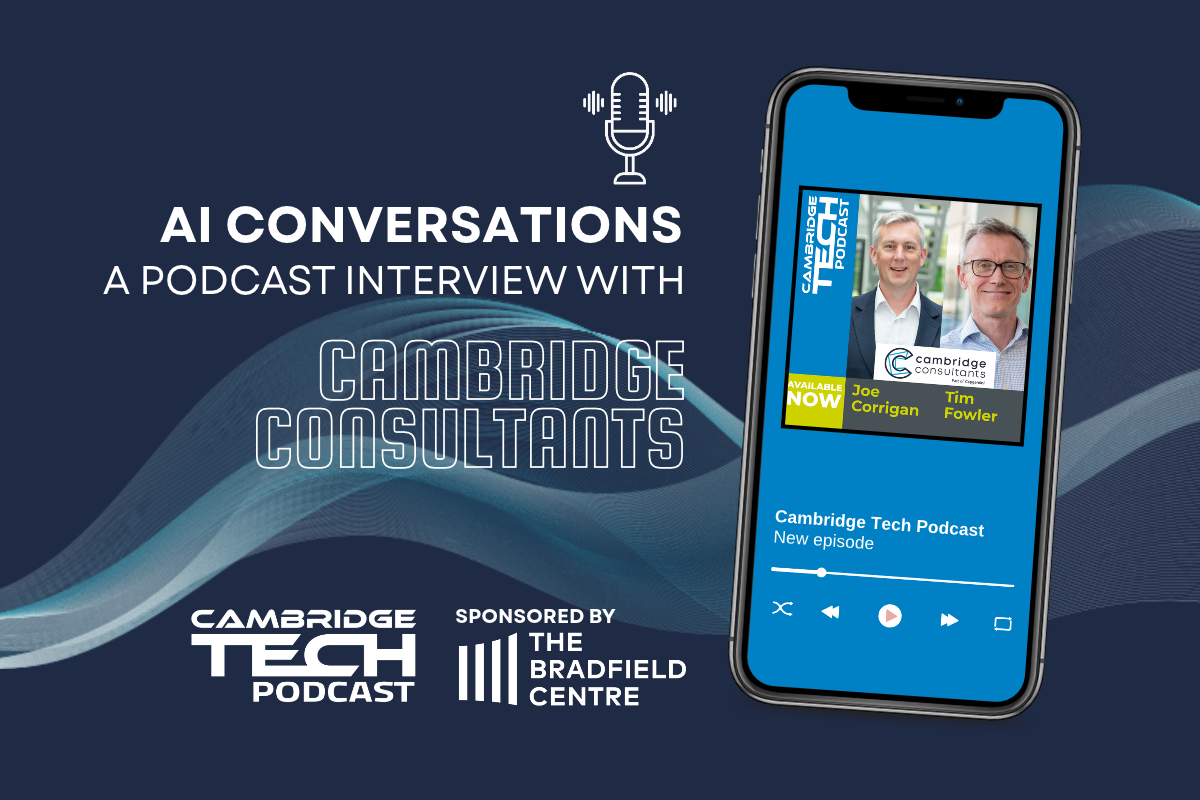
In this episode of the Cambridge Tech Podcast, James Parton speaks with Joe Corrigan, Chief Technology Officer, and Tim Fowler, Chief Commercial Officer, at Cambridge Consultants.
The conversation explores The Deep Tech Index and a challenge familiar to founders, investors and corporate leaders alike: businesses say they want radical innovation, yet their systems often make it difficult to pursue. The guests unpack why incremental improvements can preserve the status quo while disruptive ideas create genuine strategic advantage.
Joe and Tim argue that innovation is not simply a technology question. It is a leadership and execution question. Radical ideas can threaten an existing business model, which is precisely why they are often slowed down by familiar processes, short term return expectations and organisational caution. The organisations that succeed are those with a clear strategic direction, leaders who can sustain conviction and teams able to turn technical promise into commercial momentum.
The episode also offers practical insight for startup founders selling into large companies. Rather than relying solely on procurement, the guests recommend building broad internal support among technical and economic buyers, identifying the value that is unique to the customer and creating enough stakeholder belief that a decision cannot be easily delayed.
Key takeaways
Radical innovation is designed to reshape markets, not merely improve an existing product.
Leadership appetite is high, but internal systems can create a radical disconnect between ambition and execution.
Early stage projects need strategic conviction, not an unrealistic five year return forecast at the first decision point.
Technology alone is not enough. An accountable champion is often the force that carries an innovation through to market.
Artificial intelligence is a powerful enabler, but much of the next opportunity lies in its convergence with physical technologies, biology, engineering and data.
For corporates, building, buying and partnering can all play a role. For startups, proving a clear advantage and building internal advocates is essential.
Cambridge success stories including Arm, Raspberry Pi, Riverlane and CuspAI show the value of talent, experience, networks and a willingness to work through uncertainty.
Standout quotes
“The machinery of the corporation has inoculated itself against taking big risks.”
“Standing still really is not an option. You really have to innovate radically as if you were a startup.”
“The whole point of doing radical innovation is to be chosen.”
“The most successful startups are those who have got that experience somewhere in their leadership.”
From the iPhone’s platform play to the hard choices behind stopping weak projects, this is a sharp conversation about how companies can move beyond safe bets and create durable advantage. Listen now for a grounded view of where deep tech value is built, how founders can engage enterprise buyers and why the next category defining business may begin with the courage to disrupt itself.
Subscribe to the Cambridge Tech Podcast for more conversations with the people building the technologies, companies and investment stories shaping the future.